Mining
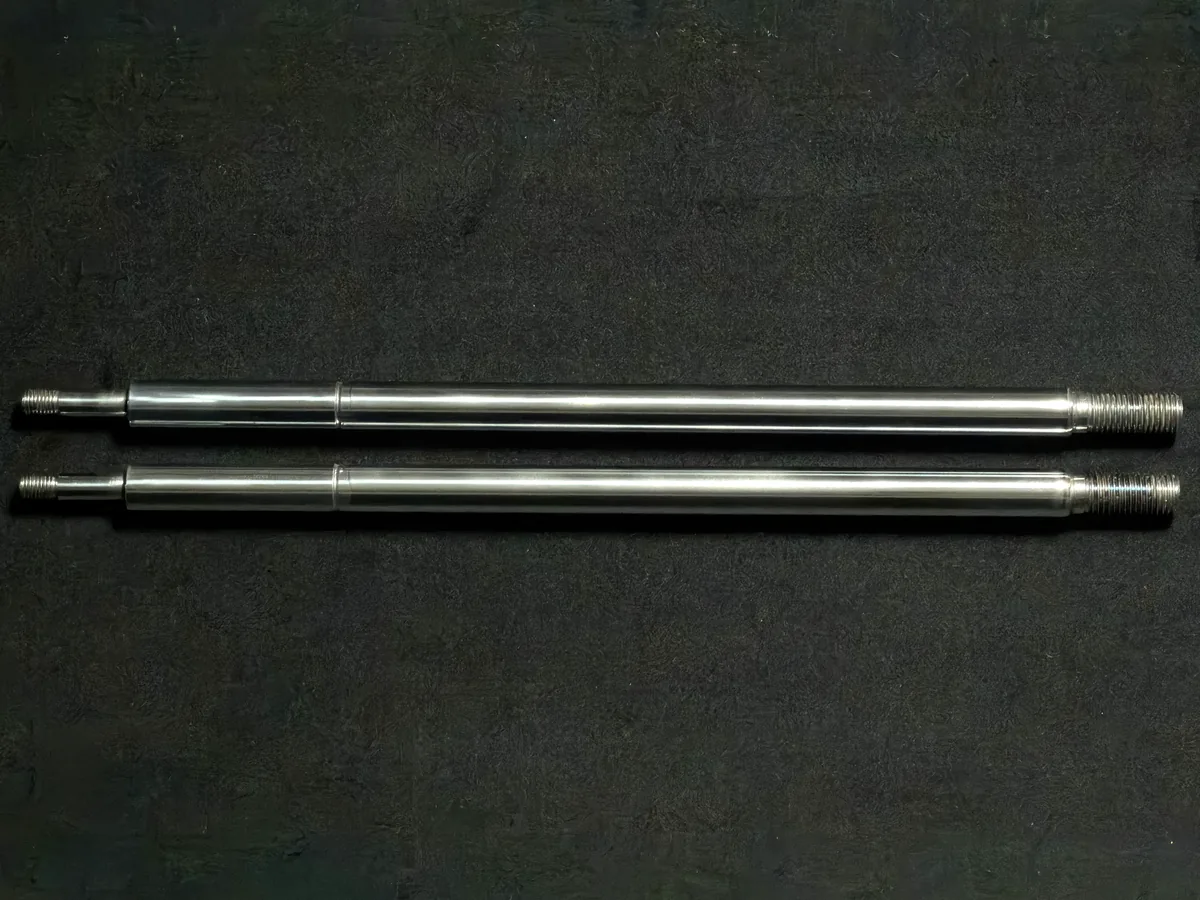
Hydraulic cylinder rods: no rust after 34 months
≥17×service life: 34 months without rust, against 2 months on the same steel
The full case study
Application
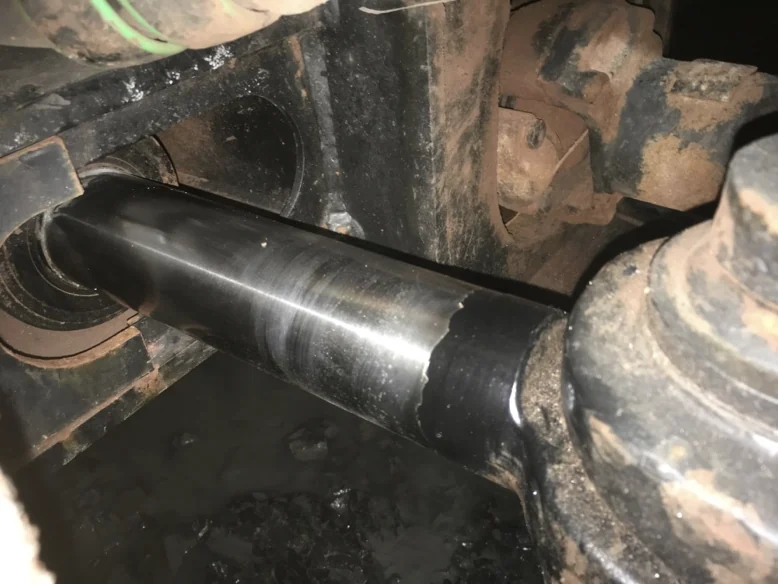
Hydraulic cylinder rods in an Australian mine, in a field case with a global mining equipment OEM. Salt, high temperature and continuous exposure to mine water. Corrosion is the failure mode.
What was compared
Rods of the same kind in the same service: two with conventional hexavalent chromium, Cr(VI), hard chrome, one on ordinary 20MnV6 steel and one on AISI 329 stainless steel, and one with TripleHard® on 20MnV6.

| Rod | Base material | Coating | In service | Condition |
|---|---|---|---|---|
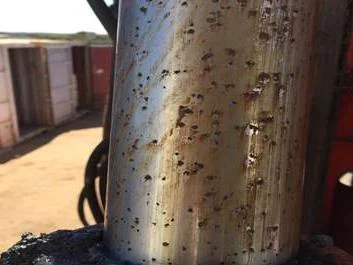
| 1 | 20MnV6 (normal steel) | Cr(VI) hard chrome | 2 months | Heavy rust. Cylinder replacement necessary |
| 2 | AISI 329 (stainless steel) | Cr(VI) hard chrome | 4 months | Rust, even on the stainless base material |
| 3 | 20MnV6 (normal steel) | TripleHard® | 34 months | No rust |
Result
On the same steel, the TripleHard® rod showed no rust after 34 months, where the hard-chrome rod had to be replaced at 2 months: at least 17 times the service life in this case. 34 months is the latest documented inspection; the coating remained in service after that. A separate spray test with 1 m, 60 mm rods in mine water showed the same difference in five days. This is one of the mining field cases on three continents (Canada, Australia and Poland), 2020–2026.
A rod that lasts at least 17 times longer is also a rod that is made, coated, shipped and fitted at least 17 times less often. Over a year of service the switch is estimated to cut CO₂ emissions by about 94 % per application. This is a calculated estimate for this one field case, from a university thesis; it is not a measured life-cycle assessment.
Mining case study (PDF) — available on request