
Hydraulics
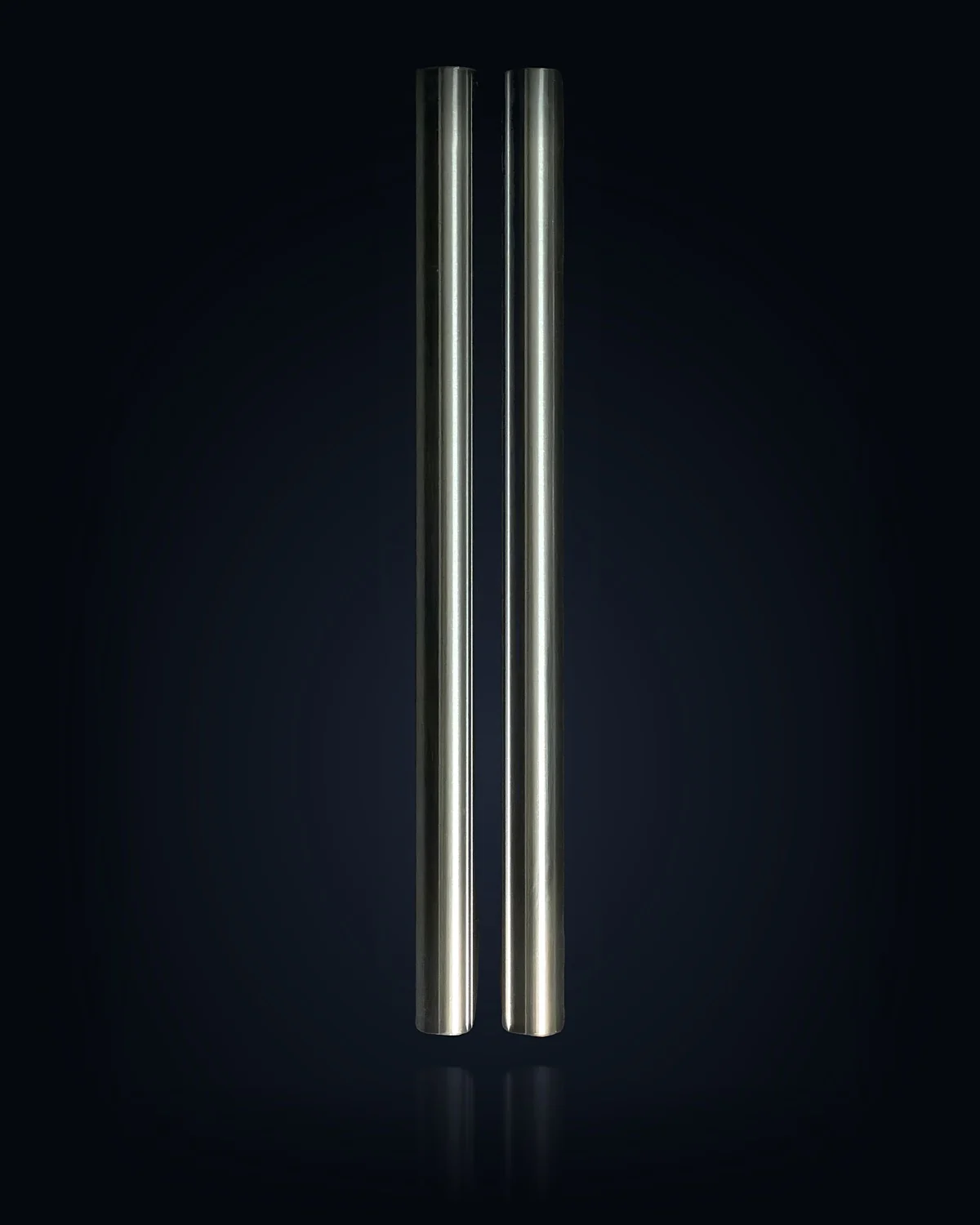
TripleHard® on hydraulic cylinder rods
In industrial use on hydraulic cylinder rods (piston rods), on a converted open-tank line today, in smaller volumes; the continuous line is the route for high-volume rod production.
Hard-chrome-level hardness without heat treatment, no rust at 34 months in mine service, and lower seal leakage than Cr(VI) in a 250,000-cycle OEM test. Made in a Cr(III) hard-chrome process.
- 1000 h
- neutral salt spray, rating 10, depends on the nickel underlayer
- ≥17×
- service life in the headline mining case: 34 months TripleHard®, 2 months Cr(VI) hard chrome
- 72 h
- in genuine mine water, droplet test: no corrosion
Why hydraulics
The rod is the part that meets the world.
A cylinder rod is scratched by grit, struck by rock, wetted by rain and mine water, and slid through a seal thousands of times a day. The coating has to survive all of it without damaging the seal that keeps the oil in.
- Scuffing and impact. Hard-chrome-level hardness and excellent adhesion: the coating stays on when the rod meets the rock
- Corrosion. Rating 10 at 1000 h in neutral salt spray, depending on the nickel underlayer; no rust after 34 months in mine service
- Seal-friendly surface. Lower seal leakage than Cr(VI) in a 250,000-cycle OEM test
- No post-plating heat treatment. Full hardness as plated
How it is produced
In industrial use.
Current In industrial use under a Savroc licence on a converted open-tank line at a licensed coater, with coated rods supplied to Hydroline.
For high-volume production, the continuous line runs surface preparation, etching, nickel and the TripleHard® Cr(III) layers in one enclosed pass. The industrial-scale reference line in Kuopio is running and open for visits; its job is to prove high-capacity continuous production of hydraulic cylinder rods, which has not yet been run.
See how the line works How a project works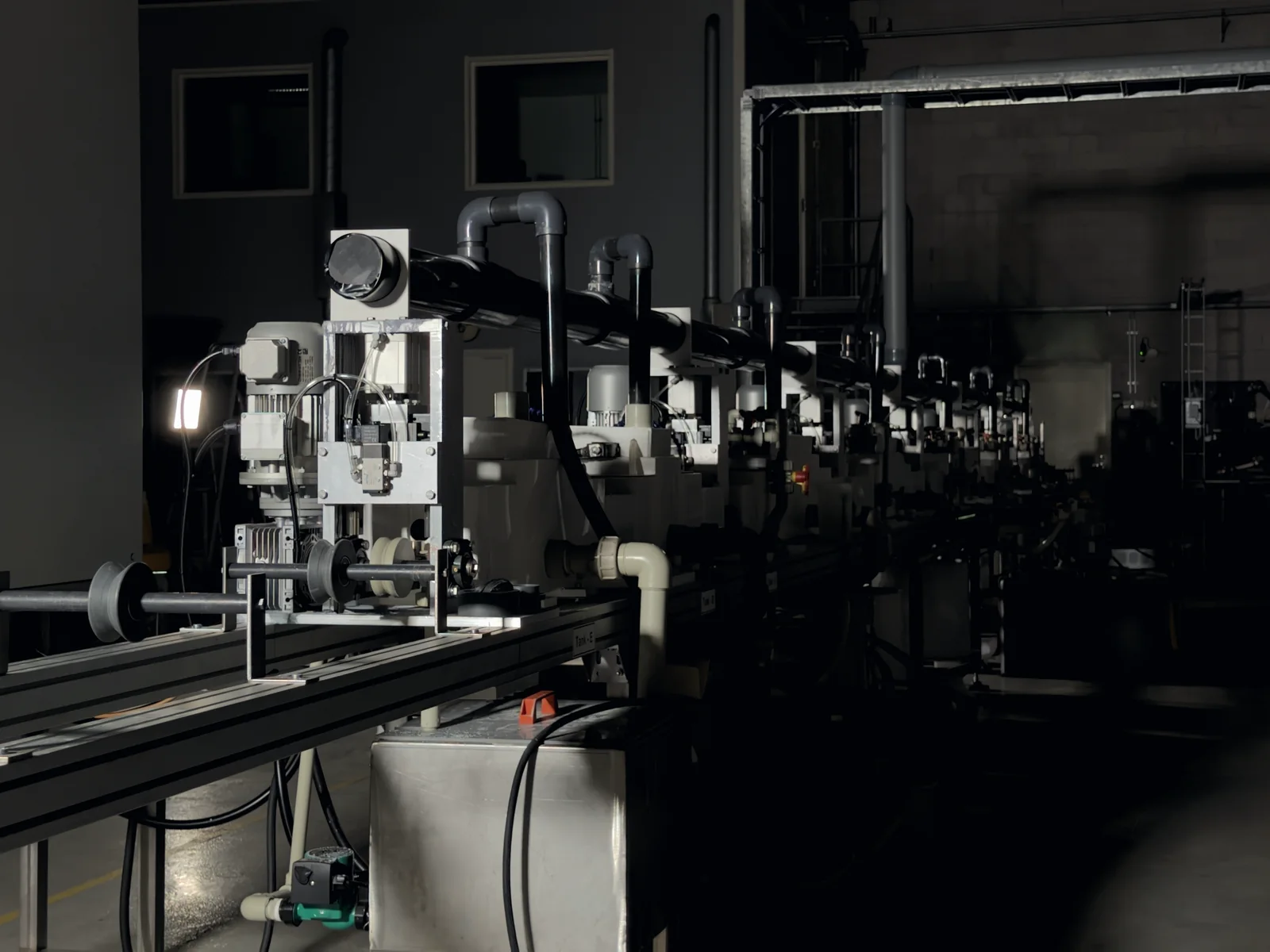
Technical package
What is measured.
Full test conditions and the regulatory position are on the technology page.
| Corrosion | NSS (ISO 9227): rating 10 at 1000 h, depending on the nickel underlayer. Field: no rust at 34 months on a mining cylinder. Lab: no corrosion in a 72 h mine-water droplet test |
|---|---|
| Hardness | Hard-chrome level, full hardness without heat treatment |
| Coating structure | Nickel anchor layer + trivalent chromium layer |
| Base materials | Ck45, 20MnV6 and other common rod steels |
| Field durability | Long-term industrial use, including 34 months on a mining cylinder |
Corrosion in service
No rust at 34 months. Hard chrome rusted at 2.
Three rods in the same Australian mine. Cr(VI) hard chrome rusted at 2 months on ordinary 20MnV6 steel and at 4 months on AISI 329 stainless steel. TripleHard® on 20MnV6 showed no rust at 34 months. 34 months is the latest documented inspection; the coating remained in service after that. Read the mining case study.
Frequently asked questions
How TripleHard® compares with thermal spray and other alternatives is set out on the Technology page.
Does TripleHard® replace Cr(VI) hard chrome one to one on hydraulic rods?
In tested applications, yes: the same rod, the same seals, and a coating with hard-chrome-level hardness that met or exceeded the Cr(VI) reference in the tests shown. Each application is confirmed with you, from the simulation of your parts to commissioning, with our data behind your own OEM qualification.
How thick is the coating?
Typically 20–40 µm on hydraulic cylinder rods. The thickness depends on the application and is specified from your drawings; it can also match the hard chrome thickness an existing drawing calls for.
Can I run it on my existing line?
Yes. Hydraulic cylinder rods are in industrial use on a converted open-tank line today. For high-volume rod production the continuous line is the route: one enclosed pass, built for around-the-clock production under online monitoring. Engine valves, shock absorber rods and other open-tank work run on an existing line, converted.
Contact
Ready to start your move off hexavalent chromium?
Talk to us about your parts and the targets they must meet, or come to Kuopio and see the line running. A first conversation needs no drawings.